
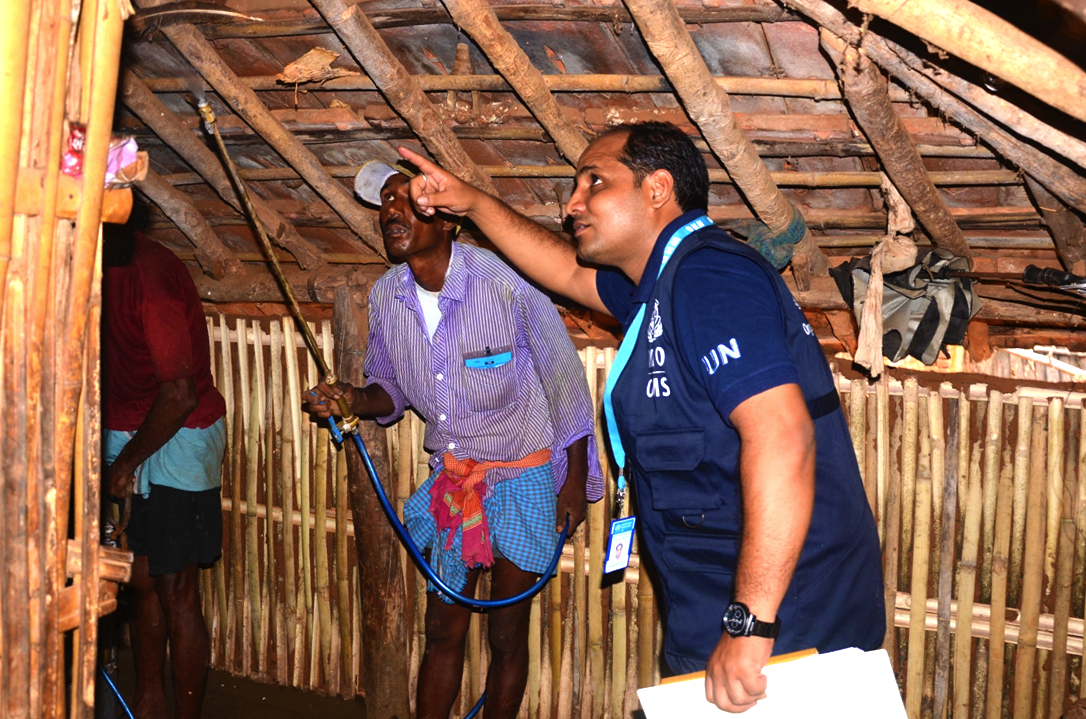
Eliminating visceral leishmaniasis as a public health problem in the South‐East Asia Region

VL, or kala-azar, is targeted for elimination as a public health problem (defined as an annual incidence of less than one case per 10 000 population at the district level in Nepal and at subdistrict level in Bangladesh and India) in the WHO South‐East Asia Region. In 2005, three endemic countries in the Indian subcontinent (Bangladesh, India and Nepal) signed a memorandum of understanding to eliminate kala-azar from the region. In 2014, this agreement was extended to include two more countries (Bhutan and Thailand).
 

> 2 million

patients treated for cutaneous leishmaniasis (2009-2018)

> 300 000

lives saved from visceral leishmaniasis (2009-2018)

> 15 000

people trained in case management

Publications

All →
WHO guidelines on leishmaniases: treatment of visceral leishmaniasis and post-kala-azar dermal leishmaniasis in eastern Africa and South-East Asia
These guidelines provide updated WHO recommendations on the pharmacological treatment of visceral leishmaniasis and post-kala-azar dermal leishmaniasis...
Integrated approach to management of skin-related neglected tropical diseases and common skin conditions

Neglected tropical diseases (NTDs) are a diverse group of disease conditions that disproportionately a£ect populations living in poverty, particularly...

Operational manual on larval source management: control of Anopheles and Aedes mosquito vectors

This operational manual provides practical guidance for the establishment, management, implementation, monitoring and evaluation of larval source management...

Contact

Dr. José Ruiz Postigo
Medical officer
Dr. Saurabh Jain
Scientist