Angel Navarrete / MSF
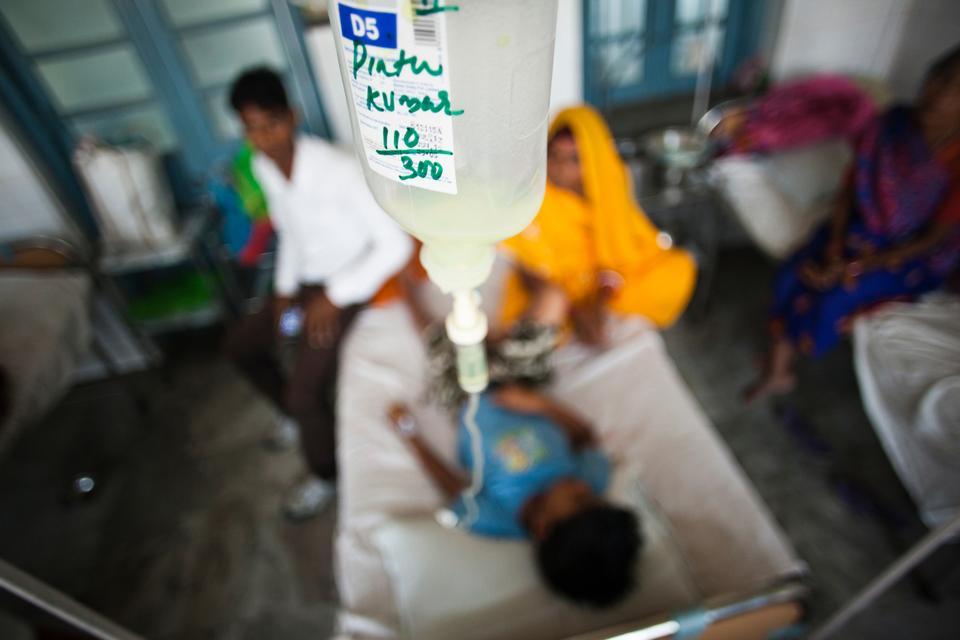
Infusion pump distributes Ambisome to Pintu Kumar at Sadar Hospital in Hajipur, Bihar State, India
Capacity‐building for health workers dealing with leishmaniasis
WHO often receives requests from Member States and implementing partners to provide training in capacity‐building in endemic areas in order to better equip health personnel to diagnose, treat and control the disease.
Hundreds of face-to-face training workshops are delivered in the most highly endemic countries every year.
However, given the increasing number of requests for training and the challenges in accessing some endemic areas because of insecurity and travel restrictions, WHO has initiated several online courses. Examples include courses on case management of CL and VL in the Region of the Americas, available at the PAHO virtual campus in Spanish and Portuguese, and a course on PKDL, available on the WHO iLearn platform.