Promoting prevention and control of Taenia solium infection through animals with the One Health approach
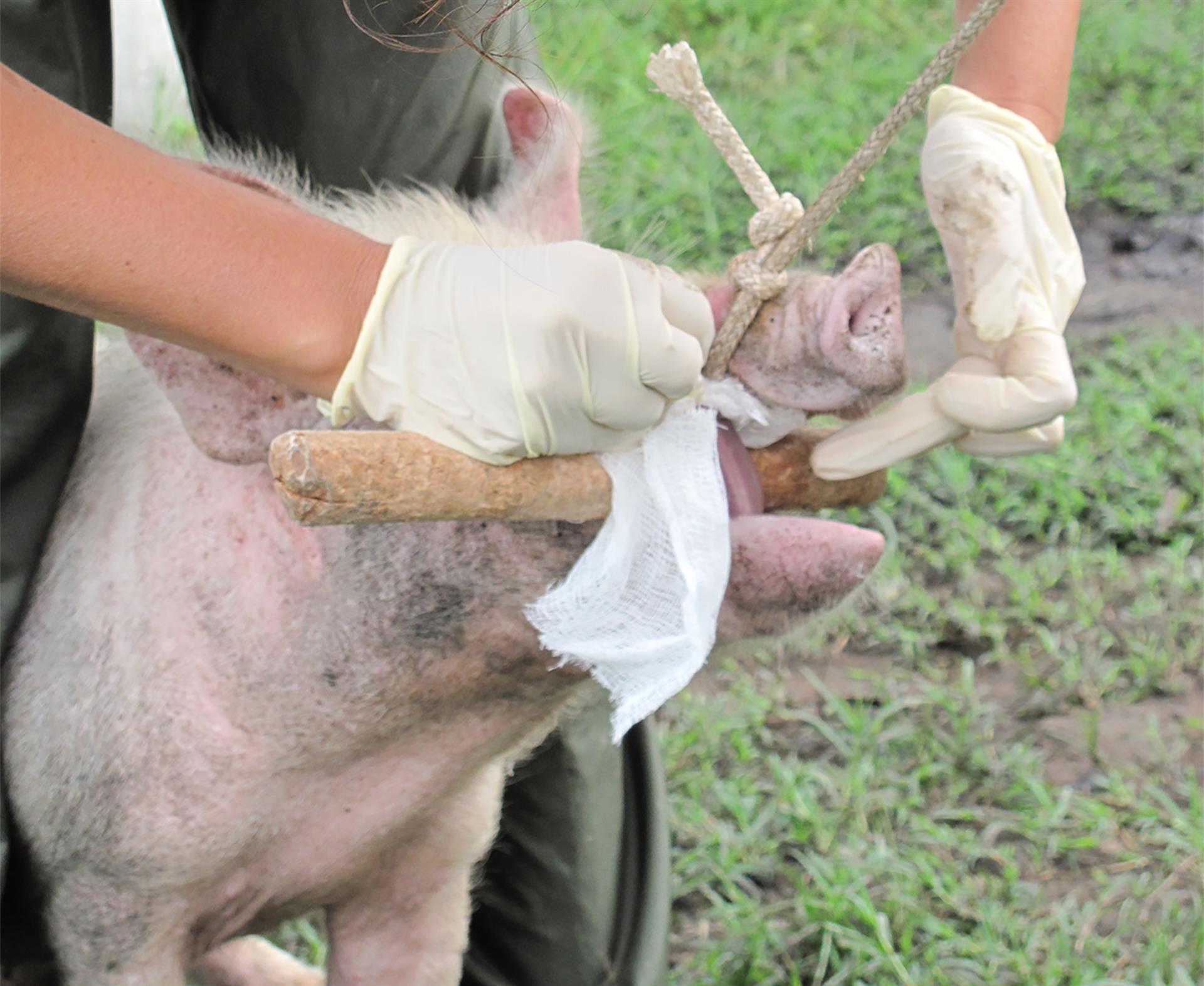
The transmission cycle of T. solium involves pigs as intermediate hosts. Infected pigs look normal, and they do not suffer little if any productive losses. Heavily infected pigs may have cysts in their tongues, but the farmers will not likely notice them. This is not a production disease of pigs, and farmers in these poor communities where the disease is transmitted do not have the understanding or the incentive to control the disease.
As part of an integrated control strategy to break the transmission cycle of the parasite it is important to implement control measures in pigs. Several mathematical control models have shown that interventions in pigs can greatly accelerate achieving human health benefits.
Advocating a multi-sectorial approach with key partners
WHO is working closely with partner agencies such as the World Organization for Animal Health (OIE) and the Food and Agriculture Organization of the United Nations (FAO) to promote animal interventions and meet the needs for interdisciplinary collaboration to control T. solium, with the final goal to prevent human suffering due to neurocysticercosis. Tri-partite joint meetings have been organized to promote concerted actions between the different sectors, such as the meeting to accelerate prevention and control of neglected foodborne parasitic zoonoses in Asian countries held in Lao PDR in 2018.
Promoting pig interventions
Specific control measures in the pig population include the vaccination of pigs with the TSOL18 vaccine (Cysvax ® produced by India Immunological Limited) and the treatment with oxfendazole. Vaccination prevents the pigs getting infected; oxfendazole cures the pigs already infected at the time of vaccination, and both can be given simultaneously.
WHO working with veterinary authorities as well as key partners in the animal sector, is supporting pilot projects incorporating pig interventions, essential to attain long-term outcomes.