© WHO / Andy Craggs
© Credits

Monitoring micronutrient status in populations

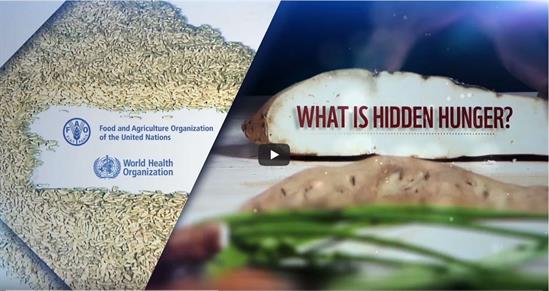
Micronutrient deficiencies, so-called hidden hunger, can lead to serious health issues including poor physical and cognitive development, increased vulnerability to diseases, and losses in productivity and potential. Micronutrient deficiencies and related conditions affect people of all ages but largely affect women and children. During the  Sixty-fifth World Health Assembly, Member States endorsed the Comprehensive Implementation Plan on Maternal, Infant and Young Child Nutrition (MIYCN), where six global nutrition targets were identified. The second target focuses on the reduction of anaemia in women of reproductive age by 50%, a multifactorial and micronutrient-related condition. Target indicator 2.2.3 in Sustainable Development Goal 2 calls for the monitoring of prevalence of anaemia in women aged 15 to 49 years, by pregnancy status.

The Monitoring and Surveillance Unit in the Department of Nutrition and Food Safety monitors the global, regional and national progress of nutrition targets through regular data collection and analysis. It also hosts and maintains global micronutrient status databases such as the Micronutrient Database (within the Nutrition Data Portal and the Vitamin and Mineral Nutrition Information System), which feeds into the Global Anaemia Estimates. The Unit develops tools to facilitate data analysis such as the Micronutrient Survey Analyser, organizes country consultations to ensure that data is updated and harmonized, publishes global estimates, and participates in technical groups that provide guidance to monitor micronutrients status in populations. Outputs are disseminated through online platforms, documents, publications and peer-reviewed articles to showcase the most recent developments and methodological contributions which improve measurement, monitoring and surveillance of micronutrient deficiencies. 
Over half a billion

women

aged 15-49 years live with anaemia globally

Access latest data

More than 1 in 3

pregnant women

suffer from anaemia globally

Learn more

4 out 10 children

aged 6 to 59 months

live with anaemia globally

Access latest data

Database

The Micronutrients database includes 40 indicators of the status of 17 micronutrients or micronutrient-related conditions, covering both deficiency and excess. There are two ways to access the database platform providing different types of outputs:

  1. Through the Nutrition Data Portal, which provides interactive summary data visualizations on the micronutrients status in populations representative at the national level.
  2. Through the Vitamin and Mineral Nutrition Information System (VMNIS), which provides tables and maps of summary data on the micronutrients status in populations representative at the national, regional (within country) and first administrative level (e.g. canton, state, province).

Latest news

All →

Publications

Multi-sectoral impacts of the COVID-19 pandemic on nutrition outcomes: an analytical framework

This document describes the process and methodology used to develop the Analytical Framework, explains the different components and provides guidance on...

Micronutrient survey manual

This manual contains modules covering all aspects of a cross-sectional micronutrient survey, from planning through implementation to analysing, reporting,...

The global prevalence of anaemia in 2011

This document describes estimates of the prevalence of anaemia for the year 2011 in preschool-age children (6–59 months) and women of reproductive...

Worldwide prevalence of anaemia 1993-2005

Anaemia is a public health problem that affects populations in both rich and poor countries. Its primary cause is iron deficiency, but a number of other...

Iodine deficiency in Europe: a continuing public health problem

Every European nation endorsed the goal of eliminating iodine deficiency at the World Health Assembly in 1992. Globally, great progress has been made since...

Global prevalence of vitamin A deficiency

Vitamin A deficiency (VAD) is the single most important cause of childhood blindness in developing countries. It also contributes significantly, even at...

Indicators

Guideline on haemoglobin cutoffs to define anaemia in individuals and populations

Appropriate guidelines for measuring haemoglobin and defining anaemia are crucial for both clinical and public health medicine but require consideration...

Best practices for haemoglobin measurement in population-level anaemia surveys: technical brief

Haemoglobin is one of the most common biomarkers that is measured for diagnosis and treatment of anaemia. It is generally measured using single-drop capillary...

Serum ferritin concentrations for the assessment of iron status in individuals and populations: technical brief

This technical brief aims to provide summarized information about the use of serum ferritin for assessing iron status in individuals and populations. It...

WHO guideline on use of ferritin concentrations to assess iron status in individuals and populations

This guideline provides global, evidence-informed recommendations on the use of indicators for assessing a population’s iron status and application...

Serum transferrin receptor levels for the assessment of iron status and iron deficiency in populations

This document aims to provide users of the Vitamin and Mineral Nutrition System (VMNIS) with guidance about the use of serum transferrin receptor levels...

Goitre as a determinant of the prevalence and severity of iodine deficiency disorders in populations

This document aims to provide users of the Vitamin and Mineral Nutrition Information System (VMNIS) with guidance about the use of goitre for assessing...

Serum and red blood cell folate concentrations for assessing folate status in populations

This document provides users of the Vitamin and Mineral Nutrition Information System (VMNIS) guidance about the use of serum (or plasma) folate and red...

Xerophthalmia and night blindness for the assessment of clinical vitamin A deficiency in individuals and populations

This document aims to provide users of the Vitamin and Mineral Nutrition Information System (VMNIS) with information about the use of xerophthalmia and...

C-reactive protein concentrations as a marker of inflammation or infection for interpreting biomarkers of micronutrient status

This document aims to provide users of the Vitamin and Mineral Nutrition Information System (VMNIS) with information about the use of CRP as a marker of...

Urinary iodine concentrations for determining iodine status in populations

This document aims to provide users of the Vitamin and Mineral Nutrition Information System with guidance about the use of urinary iodine for assessing...

Serum retinol concentrations for determining the prevalence of vitamin A deficiency in populations

This document aims to provide users of the Vitamin and Mineral Nutrition Information System (VMNIS) with information about the use of serum retinol for...

Other documents

Global nutrition monitoring framework: operational guidance for tracking progress in meeting targets for 2025

In 2012, the World Health Assembly (WHA) approved a Comprehensive Implementation Plan on Maternal, Infant and Young Child Nutrition that identified six...

Global nutrition targets 2025: anaemia policy brief

Anaemia impairs health and well being in women and increases the risk of maternal and neonatal adverse outcomes. Anaemia affects half a billion women of...

Global nutrition targets 2025: policy brief series

Recognizing that accelerated global action is needed to address the pervasive and corrosive problem of the double burden of malnutrition, in 2012 the World...

Infographics

Peer-reviewed articles

Emerging Evidence and Critical Issues with the Use of Single-Drop Capillary Blood for the Measurement of Hemoglobin Concentration in Population-Level Anemia Surveys

Advances in Nutrition Volume 15, Issue 10, October 2024, 100290

Associations between type of blood collection, analytical approach, mean haemoglobin and anaemia prevalence in population-based surveys: A systematic review and meta-analysis

Journal of Globel Health. 2022 Nov 23:12:04088

National, regional, and global estimates of anaemia by severity in women and children for 2000–19: a pooled analysis of population-representative data

The Lancet Global Health, Volume 10, Issue 5, May 2022, Pages e627-e639

Use and interpretation of hemoglobin concentrations for assessing anemia status in individuals and populations: results from a WHO technical meeting

Annals of the New York Academy of Sciences, Vol 1450, Issue 1, 5-14, 21 April 2019.

Global folate status in women of reproductive age: a systematic review with emphasis on methodological issues

Annals of the New York Academy of Sciences, Volume 1431, Issue 1, Special Issue, 35–57, November 2018.

Global, regional, and national trends in haemoglobin concentration and prevalence of total and severe anaemia in children and pregnant and non-pregnant women for 1995–2011: a systematic analysis of population-representative data

The Lancet Global Health, Volume 1, Issue 1, e16 - e25

Vitamin A supplementation programs and country-level evidence of vitamin A deficiency

Nutrients. 24;9(3):190, 2017 Feb.

Trends and mortality effects of vitamin A deficiency in children in 138 low-income and middle-income countries between 1991 and 2013: a pooled analysis of population-based surveys

The Lancet Global Health. Volume 3, Issue 9, Pages e528-36, September 2015.

An evaluation of a global vitamin and mineral nutrition surveillance system

Archivos Latinoamericanos de Nutrición Volumen 63, No. 2, Año 2013.

Global iodine status in 2011 and trends over the past decade

The Journal of Nutrition Volume 142, Issue 4, Pages 744-750, April 2012.

Addtional resources